Unusual weather patterns over Antarctica caused the ozone hole to expand dramatically in 2026, reaching one of its largest sizes on record. Despite the striking increase, scientists from NASA and NOAA say Earth’s protective ozone layer is continuing its gradual recovery and remains on track to heal later this century.
The 2026 Antarctic ozone hole ranked as the seventh-largest in 48 years of observations, based on its average seasonal area. Scientists attributed the expansion primarily to an exceptionally strong polar vortex, a large circulation of winds that influences atmospheric conditions over Antarctica. They also emphasized that international efforts to reduce harmful chemicals have prevented the hole from becoming even larger.
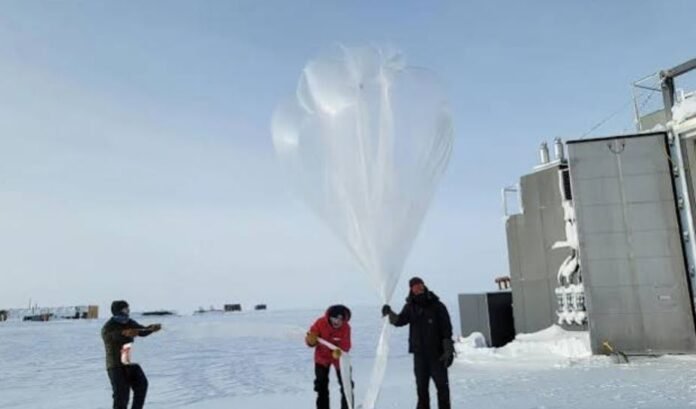
Between September 7 and October 13, 2026, when ozone depletion was at its seasonal peak, the hole covered an average of approximately 9.6 million square miles (25 million square kilometers). That is more than twice the size of the United States. Scientists closely monitor ozone in the stratosphere because it serves as Earth’s natural “sunscreen,” protecting living organisms from dangerous solar radiation. Unlike this beneficial layer high in the atmosphere, ozone near Earth’s surface is a pollutant frequently associated with human activities.
Antarctica’s Ozone Hole Reaches Its Largest Size in a Decade
The ozone hole reached its maximum extent on September 18, spreading across 10.5 million square miles (27.1 million square kilometers). This was approximately 90% of the size of the largest ozone hole ever measured, which occurred on September 9, 2000.
“The annual ozone hole has been forming later in the season in recent years, which tells us the ozone layer is healing,” said Paul Newman, a senior scientist at the University of Maryland and longtime leader of NASA’s ozone research team at the agency’s Goddard Space Flight Center. “But an unusually powerful polar vortex has extended ozone depletion in the Antarctic this season, allowing the hole to grow to proportions we haven’t seen in a decade.”
Although the hole expanded to an extraordinary size, the results also demonstrate the benefits of decades of international environmental protections. Without reductions in chemicals known to destroy ozone, the affected area could have been substantially greater.
“The 2026 ozone hole is large but could have been 1 to 2 million square miles (3.5 million square kilometers) larger if ozone-depleting substances were as prevalent in the atmosphere today as they were at their year 2000 peak,” Newman said.
How a Powerful Polar Vortex Accelerates Ozone Loss
Ozone depletion begins with chemicals released through human activities, particularly compounds containing chlorine and bromine. Atmospheric circulation transports these substances into the stratosphere, where ultraviolet radiation breaks them apart. The released chlorine and bromine atoms then participate in chemical reactions involving particles in Antarctic stratospheric clouds, leading to the destruction of ozone.