
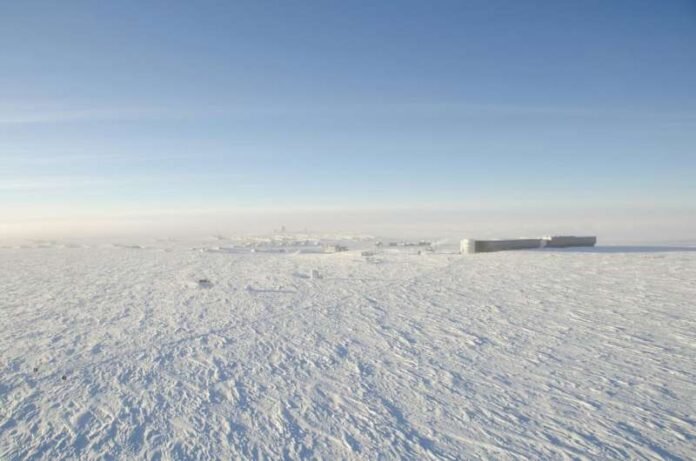
Some of the most valuable evidence about Earth’s ancient climate may be preserved much closer to Antarctica’s surface than scientists previously expected. Researchers from Vrije Universiteit Brussel (VUB) are investigating these frozen records, which could provide important information about climate conditions dating back hundreds of thousands or even millions of years.
In a new scientific perspective published in the journal Proceedings of the National Academy of Sciences (PNAS), researchers from VUB’s bglacier research group, part of the Department of Water and Climate, have highlighted the importance of Antarctic blue ice areas. These unusual regions can preserve extremely old ice, creating a valuable natural archive of the planet’s climatic past.
Until now, much of the search for ancient ice has concentrated on drilling deep into the Antarctic ice sheet. However, scientists say blue ice areas could offer another way to access exceptionally old samples, sometimes found directly at or just beneath the surface.
Dr. Veronica Tollenaar, the study’s lead author and an FWO postdoctoral researcher, explained that identifying the right locations is essential to finding these ancient deposits.
According to the researchers, certain blue ice regions could even provide access to ice older than samples recovered through conventional deep-drilling projects, while requiring considerably lower costs.
Dr. Etienne Legrain, co-lead author of the research and another FWO postdoctoral researcher, noted that these samples could offer rare insights into previous climate conditions. Studying them may help scientists better understand how Earth’s climate system has responded to environmental changes over time and what those patterns could mean for the future.
Antarctic expeditions put the research into practice
The publication comes as members of the VUB research group are carrying out two separate expeditions in Antarctica to identify and examine locations that may contain exceptionally old ice.
Joachim Piret is participating in a Chilean expedition at Union Glacier, where he is investigating potential blue ice sites. Meanwhile, Dr. Maaike Izeboud and Zoé Bosman are travelling to promising locations near Belgium’s Princess Elisabeth Station.
Both missions are focused on locating and studying ice deposits that could preserve important records of Earth’s distant climate history.
Professor Harry Zekollari, head of the bglacier research group, explained that the team combines computer models of ice movement with satellite images to identify promising areas before conducting investigations in the field.
He emphasized that bringing these scientific methods together could help uncover previously unknown chapters of the planet’s climate history.
The expeditions also form part of a longer-term research initiative through which the team hopes to contribute significantly to Europe’s exploration of Antarctica’s ancient ice archives.
The research, titled “Unlocking the unparalleled paleoclimate record of Antarctic blue ice areas,” was published in the Proceedings of the National Academy of Sciences in 2026.
Scientists believe that investigating these frozen records could open new opportunities for understanding Earth’s climate evolution, providing information that may prove valuable in interpreting future environmental changes.